Use your email address to subscribe to our newsletter and we will keep you up-to-date on the latest product developments, events and seminars.




Over the past 30 years, conventional flame retardant additives, particularly halogenated systems, have gradually been replaced due to growing concerns over their impact on human health and the environment. This has driven the increasing adoption of halogen-free flame retardants (HFFRs), which can be broadly classified into three categories:
At Comindex S.A., we distribute the HFFR product range manufactured by Presafer Phosphor Chemical Co., specialising in ammonium polyphosphates (APP) and melamine cyanurate (MCA).
APPs exhibit intumescent behaviour, meaning that when a material containing APP is exposed to flame, it forms an expanded carbonaceous foam that provides thermal insulation and protects the substrate by preventing the spread of fire. Compared with inorganic HFFRs such as ATH, APPs are considerably more efficient, making it possible to achieve equivalent flame retardancy with significantly lower loading levels—often reducing the amount required by as much as half.
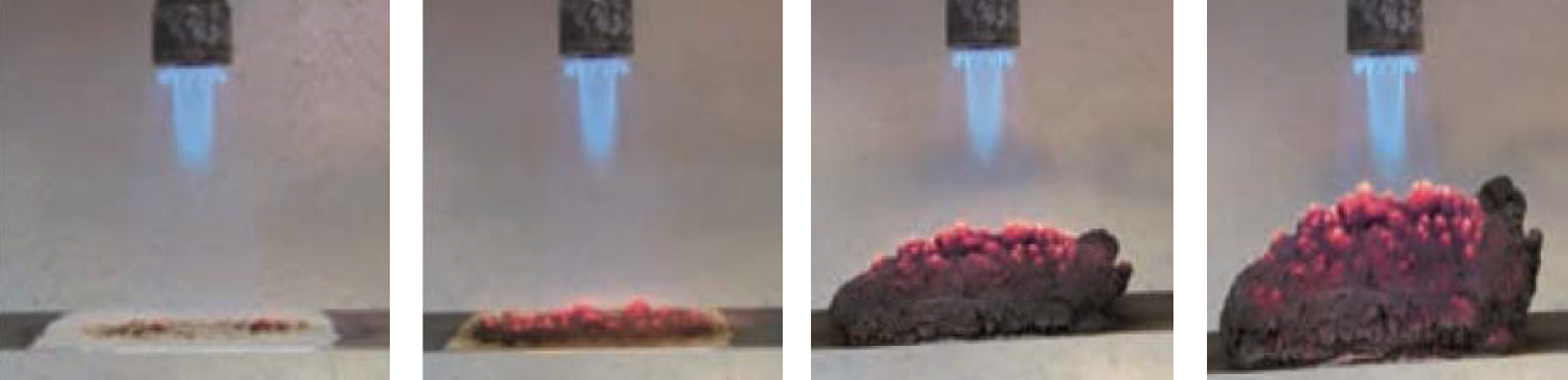
Image courtesy of Presafer: Flame test showing the expansion of the protective char layer on an intumescent coating.
Unlike conventional ammonium polyphosphates, Presafer’s PRENIPHOR® range offers greater thermal stability, improved weather resistance and a higher degree of polymerisation. It also contains exceptionally low levels of low-polymerisation species, providing superior long-term stability compared with standard market alternatives. Also, PHONITON®, Comindex’s range of melamine cyanurate (MCA), is a nitrogen-rich flame retardant that acts by absorbing heat while releasing inert gases (N₂, H₂O and CO₂), which help suppress combustion. MCA is typically used as a synergistic additive alongside APP to further enhance flame retardancy. PHONITON® grades remain stable up to 300°C and begin to decompose at approximately 320°C. Both PRENIPHOR® and PHONITON® are supplied in powder form.
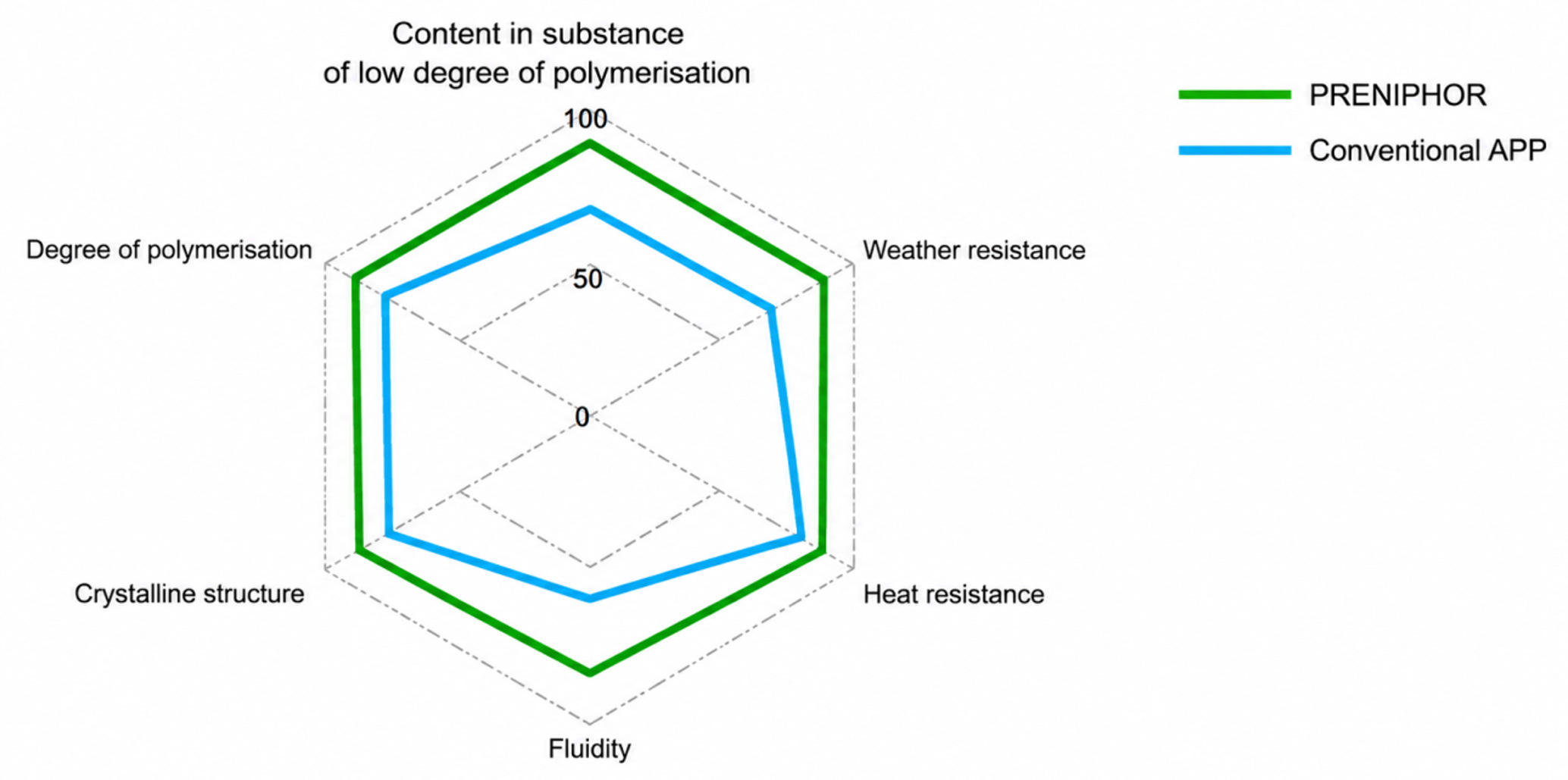
Image courtesy of Presafer: Performance comparison between PRENIPHOR® and conventional ammonium polyphosphates.
These halogen-free flame retardants are widely used across a broad range of industries, including thermostable resins, paints, varnishes, industrial coatings, sealants and PVC plastisols.
At Comindex –part of IMPAG Group– we can support you throughout your process. Simply contact our team of technical sales advisors.