Use your email address to subscribe to our newsletter and we will keep you up-to-date on the latest product developments, events and seminars.



Solutions for increasing viscosity in formulations
Fumed silica is a white, fluffy, amorphous and non-toxic powder widely used in the chemical industry as a thickener and reinforcing agent in liquid systems. At Comindex S.A., we are the distributors of Letop, a leading Chinese manufacturer, and a trusted supplier of rheological modification solutions for diverse formulations.
Synthesis of fumed silica
Fumed silica is produced by subjecting silicon tetrachloride to an intense flame at temperatures ranging from 1,000 °C to 2,400 °C, which generates molten spheres of silicon dioxide. These spheres join together in branched aggregates, forming a tertiary structure. The resulting product is a very low-density agglomerate with a high specific surface area.
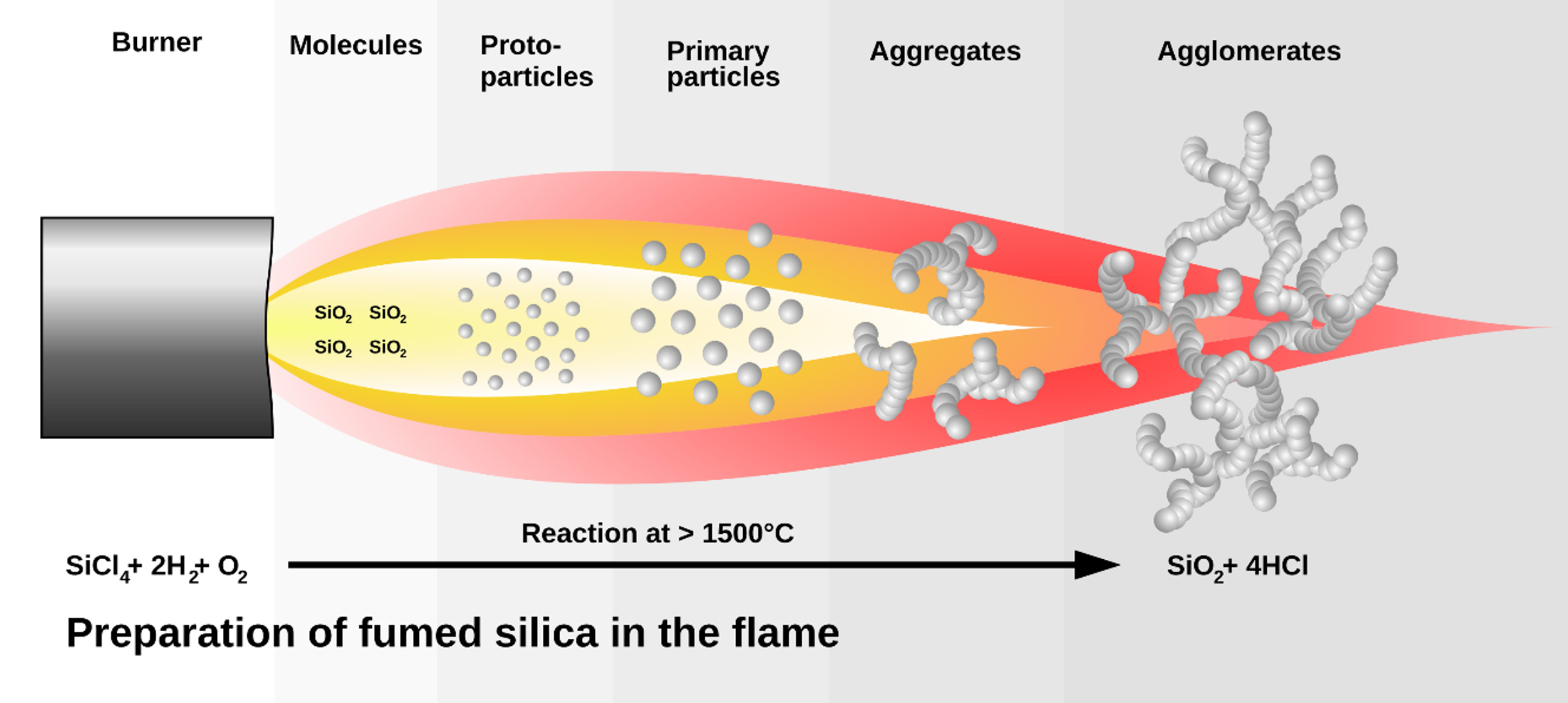
Source: Preparation of Catalysts and Photocatalysts Used for Similar Processes.
DOI: 10.1016/B978-0-444-64015-4.00002-X
Heterogeneous Photocatalysis (pp.25-56)
By default, the fumed silica obtained is hydrophilic, meaning it has a strong affinity for water and can modify rheology in aqueous systems. However, the surface can be modified with silane groups to repel water and reduce moisture absorption. This treatment yields hydrophobic silica, compatible with solvent-based systems and resins.
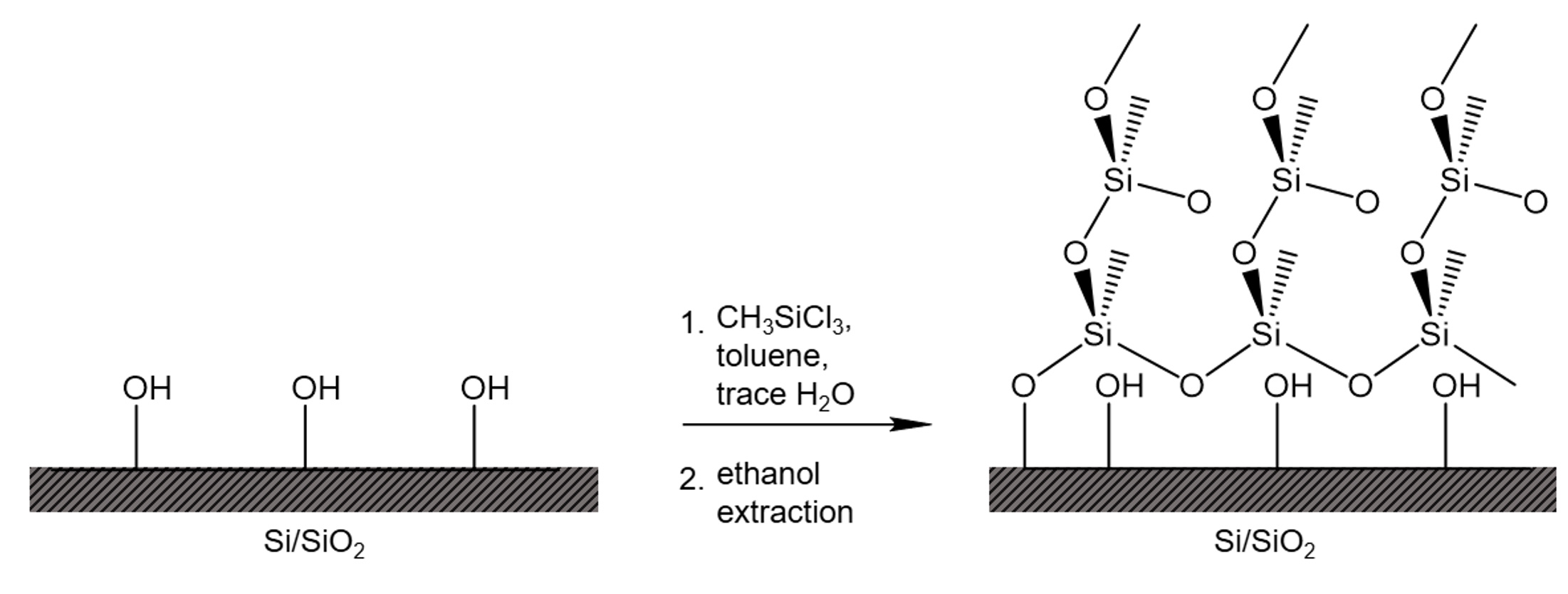
Source: Hydrophobic Silane Surface Treatments.
https://technical.gelest.com/wp-content/uploads/2020/06/12-Perfect-Hydrophobicity-%E2%80%93-180%C2%B0.svg
Letop’s fumed silicas, marketed under the trade name UPSIL, have a particle size ranging from 7 to 40 nm, a BET surface area between 100 and 380 m²/g, and can be either hydrophilic or hydrophobic.
Rheology modification and performance properties
Fumed silicas act as rheology modifiers through the formation of a three-dimensional structure of hydrogen bonds, which increases the viscosity of the system as the movement of the particles is restricted within this “network”.
Furthermore, silica modifies fluids in such a way that they exhibit thixotropic behaviour, meaning that viscosity decreases when a shear force is applied but the structure is regained once the stress is removed. This occurs because the hydrogen bonds break under shear stress but reform when the system returns to its resting state.
By correctly dispersing our Upsil grades in your formulation, you can prevent sagging on the surface after the product is applied and also avoid sedimentation of the dispersed components in the solution. In addition, in other applications they can act as reinforcement to improve wear and impact resistance.
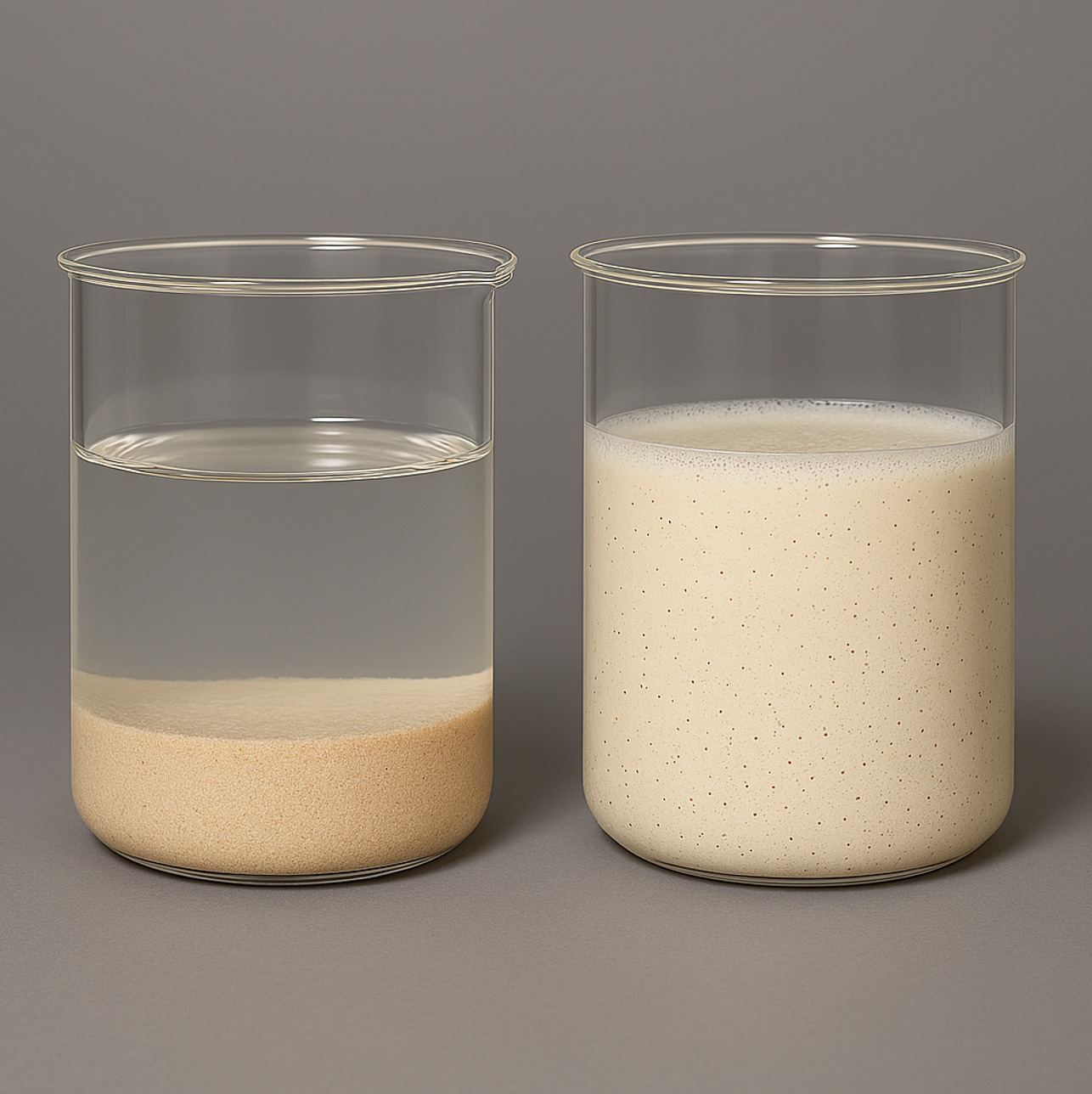
Source: Image generated by M365 Copilot AI
Uses and applications of fumed silicas
As mentioned previously, the use of silicas is widespread in the chemical industry. Some examples of applications include the coatings and paints industry, inks, gel batteries, silicone sealants, adhesives, composites and bituminous systems.
At Comindex S.A., we supply fumed silicas for the rheological modification of formulations. And you—do you need to modify the rheology of your product?
Do not forget that here at Comindex we can support you throughout your process. Simply contact our team of technical sales advisors.